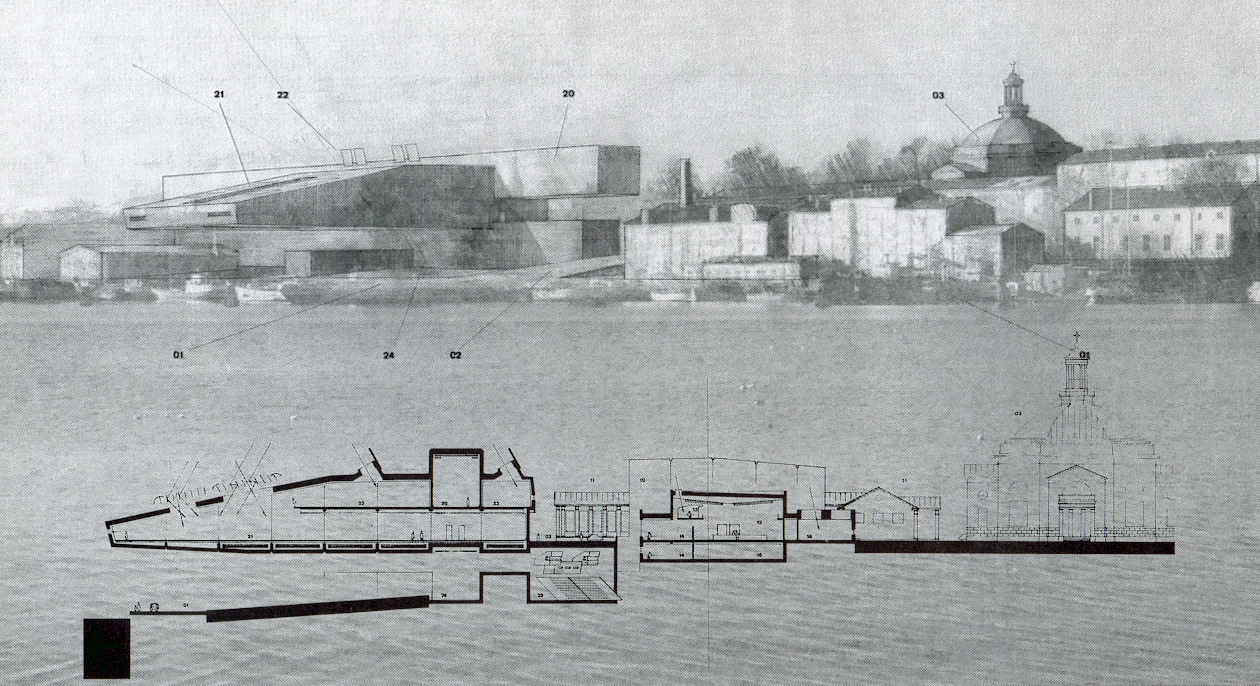
Moderna Museet
Competition entry by Mikael Askergren (1990). New buildings for Moderna Museet and Arkitekurmuseet (the Swedish national museums of modernist art and of architecture) on former navy docklands on Skeppsholmen island in the center of Stockholm, the nation’s waterfront capital.
The building as catalogue, the collections as library
All artworks in the extensive collections of Moderna Museet are on display to the public in the same rational, windowless space as they are permanently stored.
The permanent collections of the National Museum of Modern Art in Stockholm, Sweden are considered to be of high and even quality, but are to a great extent kept in storage and out of sight to the public that pays for the purchases. The real center of the proposed new building for the museum is not the cantilevered quasi-shaver/moon shuttle-shaped waterfront winter garden exhibition space (for temporary art shows, and for other kinds of events—like dog or cat shows, ballroom dancing, boy scout jamborees). Instead the real center of gravity is the great gallery of the permanent collections, a more magnificent space than that of the shaver/moon shuttle: four hundred meters of continuous wall.
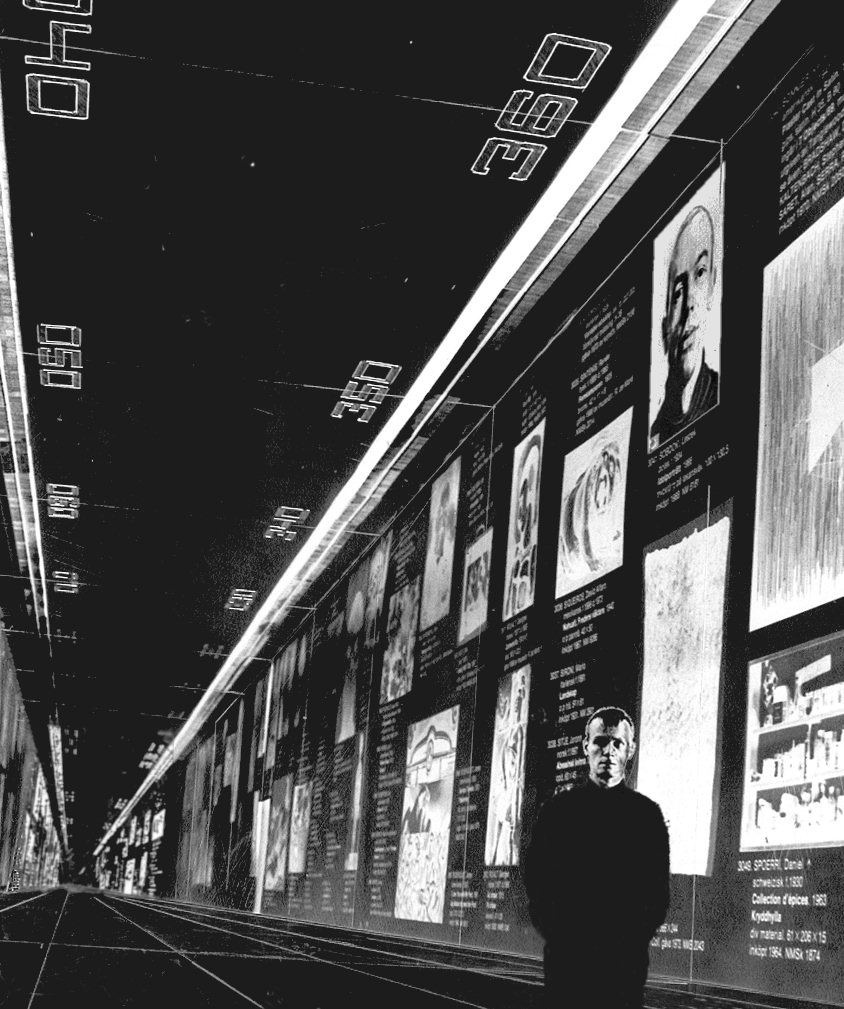
No windows or skylights that could leak or be inviting to burglars. No natural lighting that might damage some works of art. Spatial clarity. Easy and inexpensive surveillance and maintenance. With the help of an overhead traveling crane running the whole distance of the gallery, all sections of the walls and floors can be reached. One great space where the collections in their entirety are made accessible to the public, without this accessibility costing more than conventional arrangements, since every square meter of wall and floor is used. (Instead of having a limited number of works of art from the permanent collections selected by a curator and presented to the public in a spacious, tastefully designed and tranquil, almost empty and therefore costly, but often ever so dull, milieu, and the rest, the major part of the collections hidden away in storage and never shown to the public.)
The building as catalogue, the collections as library, open for unlimited excavation. The excavator is aided in his search by, among other things, numbers on the ceiling every ten meters, which correspond to how all objects and works of art are numbered according to the chronology of the artist’s oeuvres, and are placed in alphabetical order according to the artists’ names, just like in the printed catalogue published by the museum today.